Chamoy is a wet sauce. Tajín is a dry seasoning. That is the whole difference in one line, and it is why they do completely different jobs.
They get confused constantly, partly because they show up in the same places and partly because both bring chili and lime. Here is what each one actually is, how they taste side by side, and which to reach for.
What is the difference between chamoy and Tajín?
Chamoy is a Mexican condiment made from pickled fruit, chiles, lime and salt. It pours. It clings. It is sweet, sour, salty and tangy all at once.
Tajín is a brand, not a food category. When most people say "Tajín" they mean Tajín Clásico, the chili-lime seasoning in the shaker: mild chili peppers, dehydrated lime and sea salt. It is tart and salty with gentle heat, and it adds almost no sweetness.
What is chamoy?
Chamoy starts with fruit that has been pickled in brine, usually apricot, plum or mango. That fruit gets blended with chiles, lime and salt into a sauce that ranges from thin and drinkable to thick and syrupy depending on who made it.
The pickling is the part people miss. It is what gives chamoy that funky, puckering sourness underneath the sweetness, and it is why nothing else on the shelf tastes quite like it. If you want the longer version, we wrote a full guide to what chamoy is.
Because it is wet, chamoy coats. It is what turns a cup of fruit into a chamoyada, rims a michelada glass, and soaks into candy instead of sitting on top of it.
What is Tajín?
Tajín Clásico is a dry seasoning blend that launched in Mexico in 1985 and is now in basically every grocery store in the US. Three things: chili peppers, lime, salt.
The heat is deliberately mild. Tajín is built to be sprinkled generously on fruit, vegetables, rims and snacks without overwhelming anything, which is exactly why it became a household staple.
Worth knowing: Tajín the company also sells a chamoy hot sauce. So you can buy Tajín-brand chamoy, which is part of why the two names blur together in people's heads.
How do chamoy and Tajín taste next to each other?
Put both on a mango slice and the difference is immediate.

- Chamoy hits sweet first, then sour, then a salty tang, with the chili arriving last and low. It changes the fruit into something else.
- Tajín hits salty and tart right away with a quick, bright chili edge. It sharpens the fruit and gets out of the way.
Chamoy is a transformation. Tajín is an amplifier. Neither is the stronger one, they just move in different directions.
When should you use chamoy, and when Tajín?
Reach for chamoy when you want sweetness and body: chamoyadas, mangonadas, fruit cups you want to feel like dessert, rim dips, drizzling over ice cream or gummies.
Reach for Tajín when you want brightness without sweetness: fresh fruit, cucumber and jicama, elote, popcorn, michelada and margarita rims, roasted vegetables.
And most of the time in real Mexican snacking, the answer is both. Chamoy for the coat, Tajín or another chili-lime blend for the finish. That layering is the whole point.
Chamoy vs Tajín at a glance
Can you use chamoy and Tajín together?
Yes, and most of the time that is exactly what you want. Chamoy and Tajín are not competitors, they are two layers of the same idea.
The standard move in Mexican snacking is chamoy first, chili-lime powder second. The chamoy goes on wet and coats whatever it touches, bringing sweetness and that deep pickled sourness. The powder goes on top and adds salt, a bright citrus edge and texture. You get body from one and definition from the other.
Try it on a mango. Chamoy alone is good. Tajín alone is good. Chamoy then Tajín is the version people keep eating until it is gone.
The same logic runs through a michelada rim, a fruit cup, a bag of popcorn and, as it happens, a piece of chamoy candy.
What is Tajín chamoy sauce?
Here is the part that confuses almost everyone. Tajín the company does not only make the dry seasoning. It also sells a chamoy hot sauce under the Tajín name.
So "Tajín chamoy" is a real product, not a mix-up, and that is a large part of why the two words get searched together. When someone says they want chamoy and Tajín, they might mean the sauce and the powder as two separate things, or they might mean one bottle of Tajín-brand chamoy.
Either way the underlying distinction holds. Chamoy is the category, a sauce made from pickled fruit. Tajín is a brand that makes both a chili-lime seasoning and a chamoy. Wingstop's Sweet Heat Chamoy leaned on exactly this pairing when it launched in 2026, using a chamoy rub finished with a Tajín chamoy drizzle.
So which one is on chamoy candy?
Both, in effect, and that is what makes good chamoy candy work.

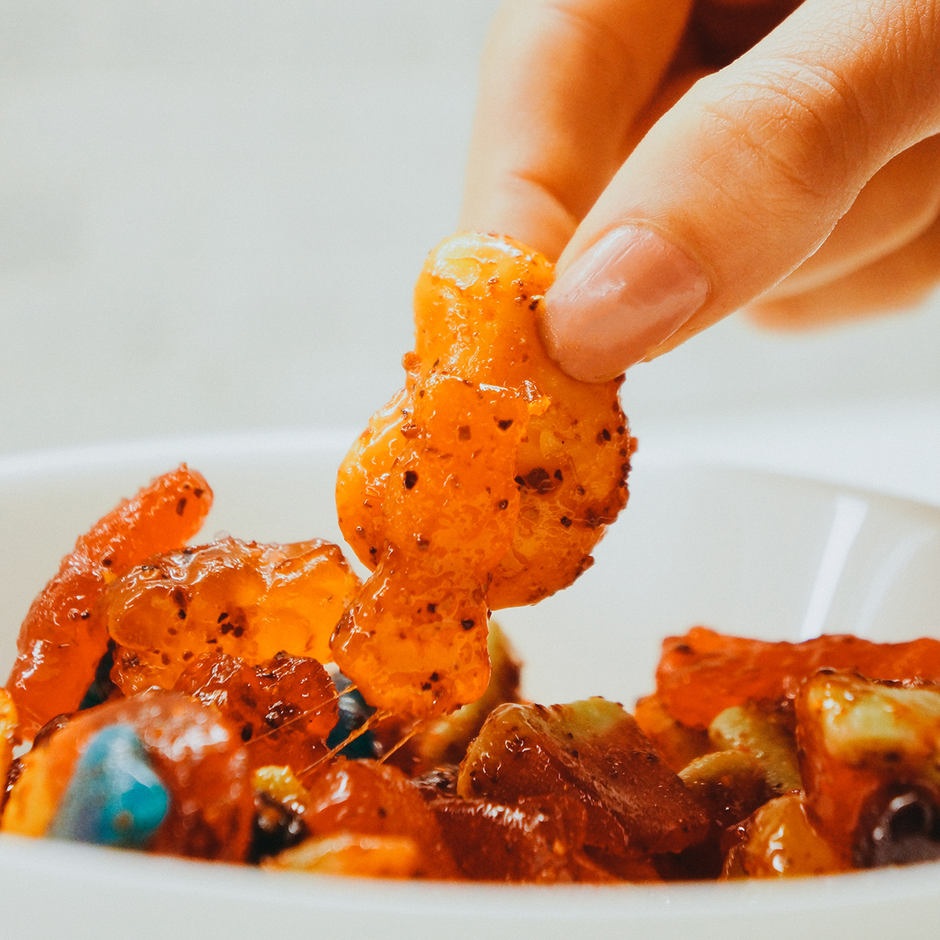
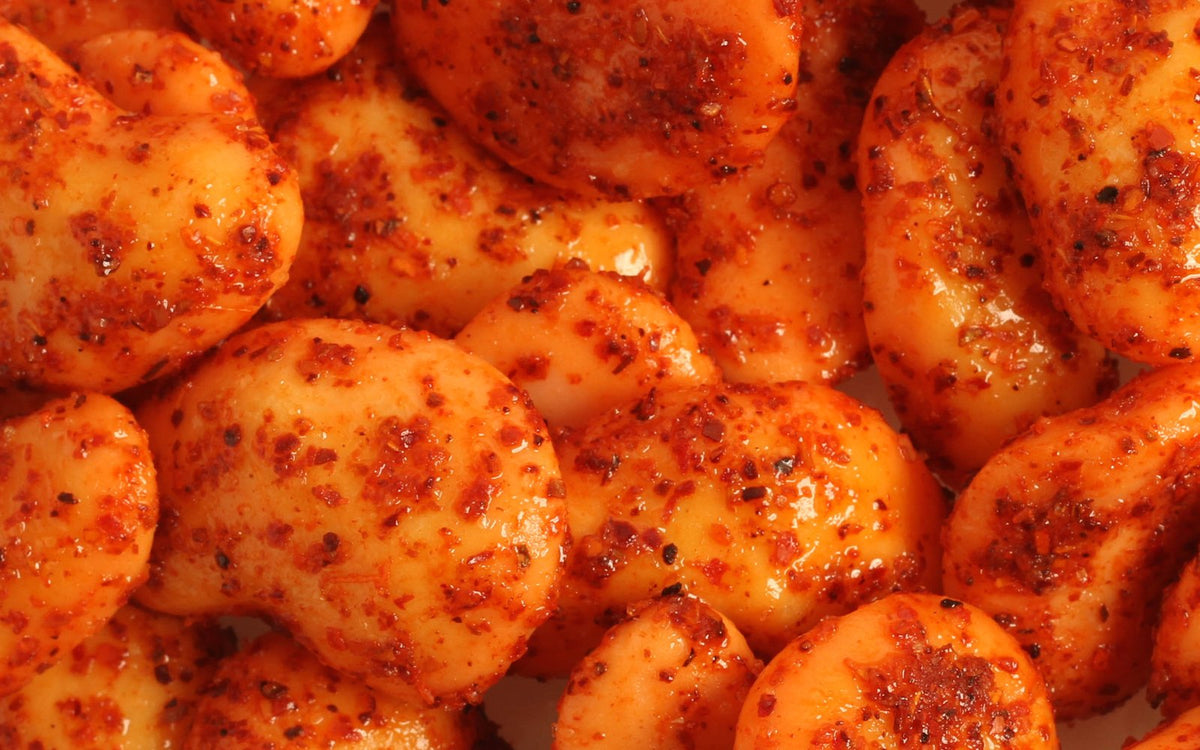
Every piece we make gets hand-coated in real chamoy first, then hit with our own chili-lime spice mix on top. The chamoy brings the sweet, sour, tangy body. The chili-lime brings the salt and the slow heat that builds after you swallow. Sweet, spicy, salty, sour, all at once.
Candy that skips the sauce and only uses chili-lime powder is a different product. It is tart and dusty and fine, but it is not chamoy candy, and once you have had the real version you can taste the gap instantly.
Frequently asked questions about chamoy and Tajín
What is the difference between chamoy and Tajín?
Chamoy is a wet sauce made from pickled fruit, chiles, lime and salt, and it is noticeably sweet. Tajín Clásico is a dry chili-lime seasoning with almost no sweetness. One coats, the other dusts.
Is chamoy the same as Tajín?
No. Chamoy is a type of condiment. Tajín is a brand. The confusion is fair, though, because Tajín sells a chamoy sauce as well as its famous seasoning.
Can you use chamoy and Tajín together?
Yes, and you usually should. Chamoy first for body and sweetness, chili-lime powder second for salt and a bright finish. That layering is standard in Mexican snacking.
What is Tajín chamoy?
A chamoy hot sauce sold under the Tajín brand. It is a real product, which is why the two names get searched together so often.
Which is spicier, chamoy or Tajín?
Both are mild. Tajín's heat is immediate and light. Chamoy's heat arrives last and builds slowly after the sweetness and sourness.
Which one goes on fruit?
Either, and both. Tajín sharpens fresh fruit without adding sweetness. Chamoy turns it into something closer to a dessert. Together they make a fruit cup.
Which one is on chamoy candy?
Real chamoy candy uses both ideas: a chamoy coating for the sweet and sour body, then a chili-lime blend on top for salt and slow heat. Candy that only uses chili-lime powder is a different product.
Try it yourself
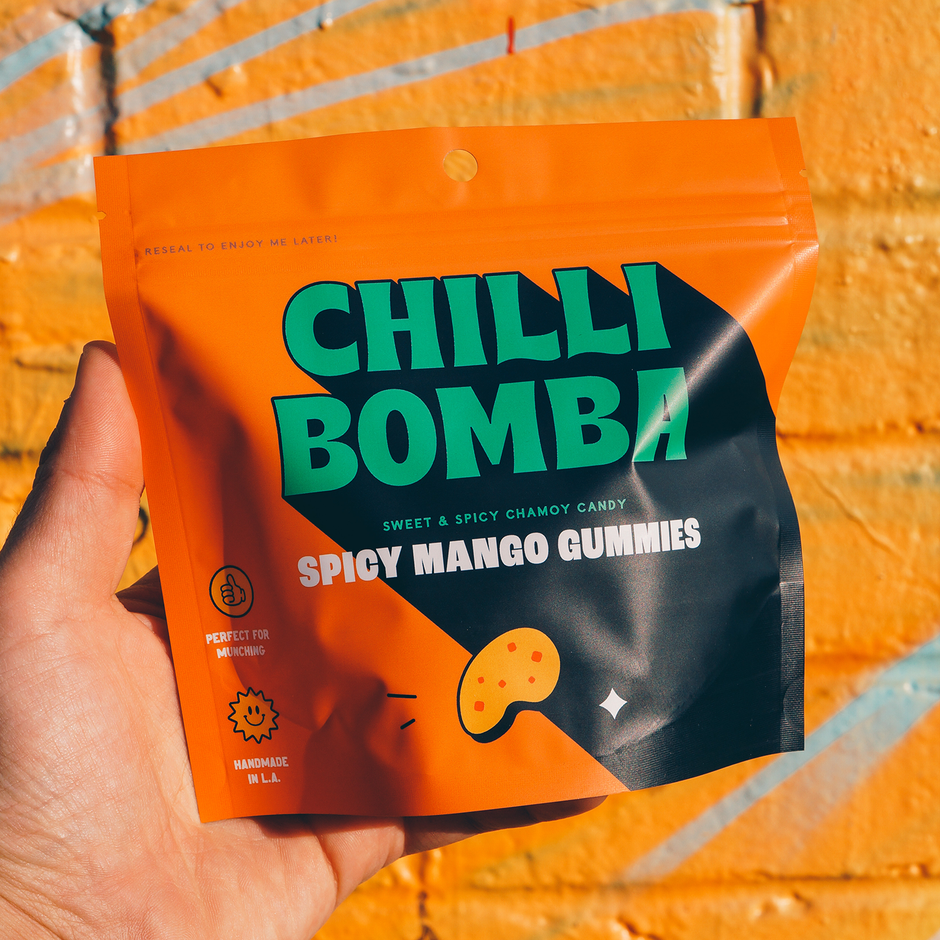
The fastest way to understand the difference is to eat it. Spicy Mango Gummies are the clearest example we make: real mango, real chamoy, real chili. New to all of this? Spicy Peach Rings sit at a friendly Medium.
Want to build your own instead? Our five chamoy recipes cover chamoyadas, rim dips and fruit cups, and every one of them is a good place to test chamoy and Tajín side by side.
Real chili. Real chamoy. Small batch, hand-made in Los Angeles, shipped nationwide.