Mexican candy is safe to eat. The reason people ask is that lead has genuinely been found in some chili and tamarind candies over the years, mostly imported, and both the FDA and the state of California have written rules specifically about it.
That is worth understanding rather than worrying about. Here is what the actual limits are, why chili and tamarind come up, what has changed, and what to look for when you buy. We make chamoy candy in Los Angeles, so this is a topic we pay attention to.
This is general information, not medical or legal advice. If you have a specific health concern, particularly about a child, speak to your doctor.
Why does lead come up with Mexican candy at all?
Two separate reasons, and they often get blurred together.
The first is the ingredients. Chili and tamarind are agricultural products, and plants take up trace amounts of whatever is in the soil they grow in. California's regulator treats a small amount of lead in chili and tamarind candy as naturally occurring for exactly this reason. Naturally occurring does not mean harmless, it means it is not the result of contamination somewhere in the process.
The second is packaging and processing. The FDA's own guidance on this topic focuses on manufacturing practices and on lead-based printing inks used on some candy wrappers, rather than pointing at ingredients. That is a different problem with a different fix, and it is largely a story about older imported product.
What is the actual legal limit for lead in candy?
There are two numbers worth knowing, and they do different jobs.
The FDA recommends a maximum of 0.1 parts per million of lead in candy likely to be frequently consumed by small children. That guidance was issued in November 2006. It is important to be precise here: it is guidance, not a binding regulation. The FDA says so itself in the document.
California set a naturally occurring level of 0.02 parts per million for candies flavored with chili or tamarind, which took effect on September 22, 2022 under the state's Health and Safety Code. California is stricter than the federal recommendation, and it wrote a rule aimed squarely at this category rather than at candy in general.
Parts per million is a very small unit. To put 0.1 ppm in context, it is one part in ten million, or roughly a tenth of a gram in a ton. That does not make it irrelevant, because lead accumulates and there is no level considered beneficial, but it does explain why this is measured in laboratories rather than noticed by taste.
Has it got better?
Yes, meaningfully. The FDA guidance dates from 2006, and the enforcement attention that followed it, along with California's testing program and the state's later rulemaking, changed sourcing and manufacturing practices across the category. The wrapper-ink problem in particular is much less common than it was.
That is the honest picture: a real historical issue that prompted real regulation, and a category that is in much better shape than the headlines from fifteen years ago suggest.
Should I stop buying Mexican candy?
No, and we would say that even if we did not make it, because the useful response is not avoidance, it is shopping with a bit of information.
Where reasonable caution does apply is with small children and with pregnancy, simply because lead exposure matters more in both cases. If that describes your household, the sensible approach is to treat candy as an occasional thing rather than a staple, which is good advice about candy in general.
If you are worried about a specific product, a specific batch, or a child's exposure, your doctor and your state or county health department are the right people to ask. They can arrange a blood lead test, which is the only way to answer the question that actually matters.
What should you look for when buying?
None of this requires a chemistry degree. It is mostly about buying from people who will tell you things.

- A full ingredient list you can actually read. If a product will not tell you what is in it, that tells you something.
- A named maker with a real address. Anonymous repackaged candy is harder to trace if anything ever goes wrong.
- A maker who answers questions. Ask where the chamoy comes from or who makes the chili blend. A real answer is a good sign.
- Intact, food-grade packaging. Sealed, printed properly, not hand-bagged with no labelling.
- Recall notices. The FDA publishes recalls publicly, and so does California's health department. Both are searchable and free.
What is not a useful signal: color, heat, how sour it is, or how cheap it is. None of those tell you anything about contamination either way.
What about chamoy specifically?
Chamoy is made from pickled fruit, chiles, lime and salt, so it falls into the chili and tamarind family California wrote its rule about. Our complete guide to chamoy covers what actually goes into it.
The same logic applies as for any agricultural ingredient. The relevant questions are where it was grown, who processed it, and whether the maker can tell you. Those are reasonable things to ask any candy company, including us.
What can we tell you about Chilli Bomba?
We would rather be precise than reassuring, so here is exactly what we can say.

We make our candy ourselves, by hand, in our own commercial kitchen in Los Angeles, in small batches two to three times a week. We wrote up the whole process if you want to see it. It is not made by a third party and repackaged under our name, which means we know what goes into each batch and when it was made.
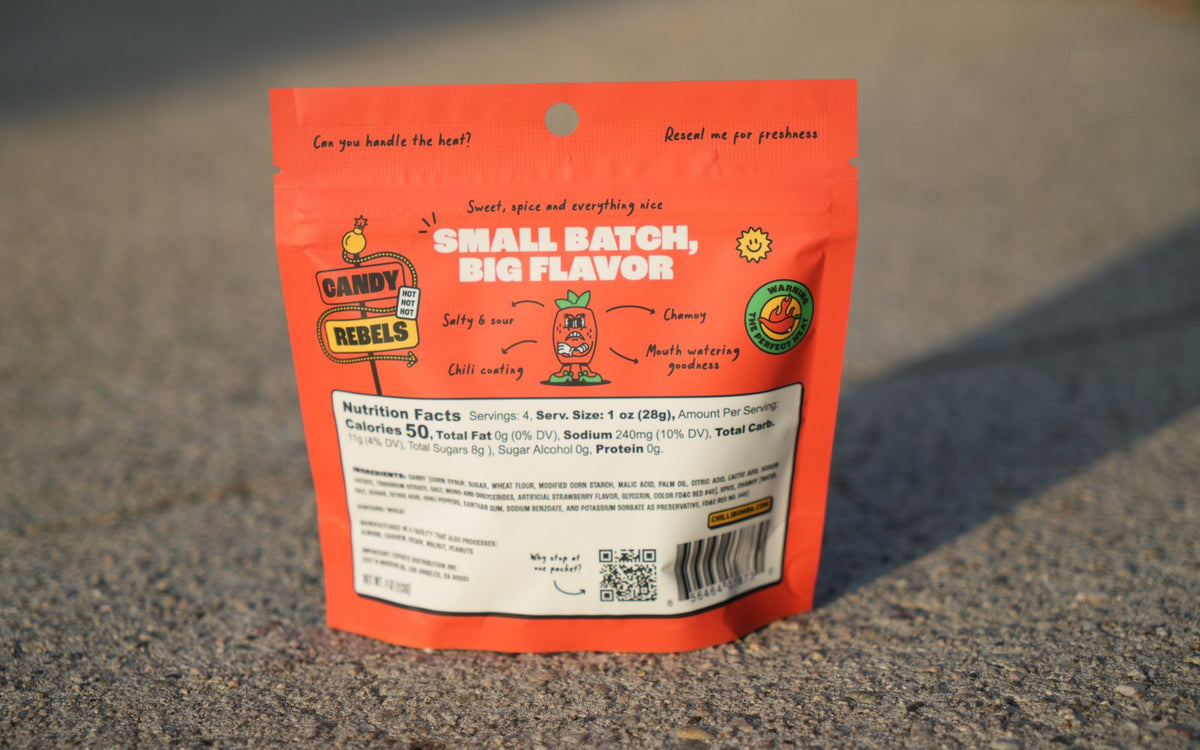
Every product page on this site lists that flavor's full ingredients and its allergen information. That is more than most of this category publishes, and we did it because we think you should be able to read the panel before you buy rather than after.
If you have a question about sourcing, ingredients or a specific batch, contact us and ask. Our FAQ page covers the routine ones. We would rather answer a direct question than publish a vague claim.
Where can you check for yourself?
Both of the regulators named in this article publish their material publicly, and neither requires an account.
- The FDA's guidance on lead in candy likely to be consumed frequently by small children, which is where the 0.1 ppm figure comes from.
- California OEHHA's rulemaking on naturally occurring lead in candy, which is where the 0.02 ppm figure comes from.
If you want a second opinion on anything in this article, those are better sources than we are.
Frequently asked questions about lead in Mexican candy
Is Mexican candy safe to eat?
Yes. Lead has been found in some chili and tamarind candies historically, which is why the FDA and California both wrote rules about it, and the category has improved substantially since. Buy from makers who publish their ingredients.
What is the legal lead limit in candy?
The FDA recommends a maximum of 0.1 ppm in candy likely to be frequently consumed by small children, as advisory guidance issued in 2006. California set a naturally occurring level of 0.02 ppm for chili and tamarind candies, effective September 2022.
Why do chili and tamarind come up specifically?
Both are agricultural products, and plants take up trace amounts of what is in their soil. California's rule treats small amounts in these candies as naturally occurring rather than as contamination.
Is it the candy or the wrapper?
Historically it has been both. The FDA's guidance focuses on manufacturing practices and on lead-based printing inks used on some wrappers, which is a separate issue from the ingredients.
Is chamoy candy safe?
The same answer applies as for the wider category. Chamoy is pickled fruit, chiles, lime and salt, so the questions worth asking are about sourcing and about whether the maker will tell you. Our beginner's guide to chamoy candy explains what the category actually is.
Is it safe during pregnancy?
Lead exposure matters more during pregnancy, so this is a question for your doctor rather than for a candy company. General advice about occasional rather than frequent consumption applies.
Is it safe for children?
The FDA's guidance is written specifically around candy small children eat frequently, which tells you where the concern sits. Occasional is different from daily. If you are worried about a child's exposure, ask your doctor about a blood lead test.
How would I know if a candy had lead in it?
You would not, by taste, color or smell. That is why it is measured in laboratories and why published recalls and transparent ingredient lists are the practical tools available to a shopper.
Where can I check for recalls?
The FDA publishes recalls and public health alerts, and California's health department publishes its own notices. Both are free and searchable.
Does Chilli Bomba publish ingredients?
Yes. Every product page lists that flavor's full ingredients and allergen information, and we make everything ourselves in our own Los Angeles kitchen rather than repackaging someone else's candy.
Hand-made in Los Angeles, in small batches, with the ingredients printed on every product page.